
Rainbow Class 8 Lesson 12 – Three Questions
Introduction
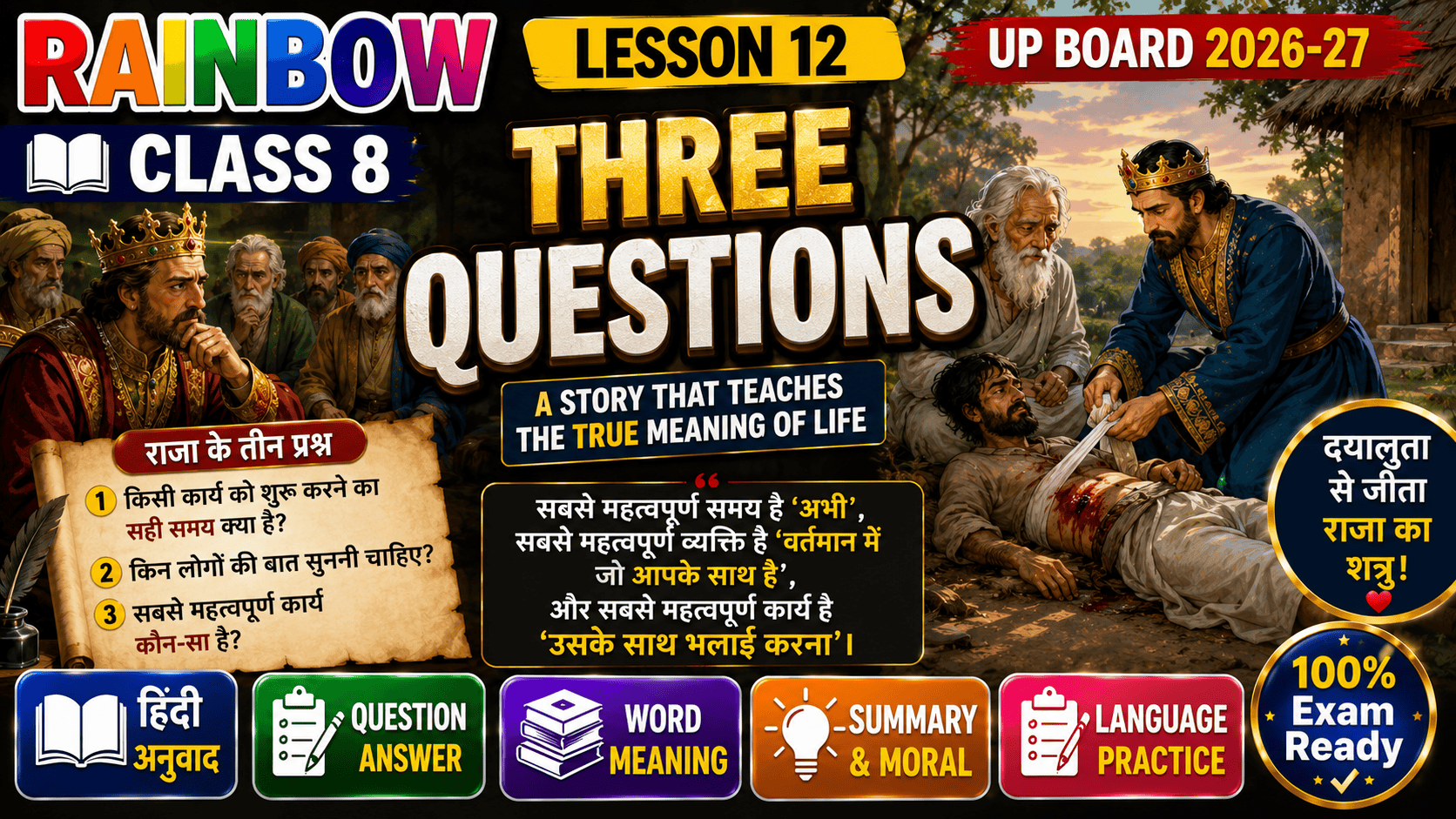
Rainbow Class 8 Lesson 12 – Three Questions is an inspiring story adapted from the famous story written by Leo Tolstoy. The story teaches us that the most important time is the present (Now), the most important person is the one with us, and the most important work is to do good to others. In this post, you will get Hindi Translation, Word Meaning, Question Answers, Exercise Solution, Summary, Moral, FAQs, Related Chapters, and SEO Details in simple language for UP Board Class 8 students.
Three Questions Hindi Translation Video
🎥 Watch Complete Hindi Translation Here
Three Questions (हिन्दी अनुवाद)
भाग–1
English: Long, long ago, there lived a very brave and kind king… promising a large sum of money to anyone who would answer these three questions.
हिंदी अनुवाद
बहुत समय पहले एक बहुत बहादुर और दयालु राजा रहता था। वह अपनी प्रजा की अच्छी तरह सेवा करना चाहता था। एक दिन उसके मन में एक विचार आया। उसने सोचा कि यदि उसे तीन बातों का सही उत्तर मिल जाए तो वह कभी असफल नहीं होगा।
वे तीन प्रश्न थे—
- किसी काम को शुरू करने का सही समय क्या है?
- किन लोगों की बात सुननी चाहिए?
- सबसे महत्वपूर्ण कार्य कौन-सा है?
इन प्रश्नों का उत्तर जानने के लिए राजा ने पूरे राज्य में संदेश भेजा और घोषणा की कि जो भी इन तीनों प्रश्नों का सही उत्तर देगा उसे बहुत बड़ा इनाम दिया जाएगा।
भाग–2
English: Many learned men came to the king… still others said it was religious worship.
हिंदी अनुवाद
राजा के पास बहुत से विद्वान लोग आए, लेकिन सभी ने अलग-अलग उत्तर दिए।
पहले प्रश्न के उत्तर में कुछ लोगों ने कहा कि राजा को एक समय-सारणी बनाकर उसी के अनुसार कार्य करना चाहिए।
कुछ लोगों ने कहा कि पहले से सही समय तय करना असंभव है।
कुछ ने कहा कि राजा को बुद्धिमान सलाहकारों की परिषद बनानी चाहिए।
कुछ अन्य लोगों का मानना था कि केवल जादूगर ही भविष्य देखकर सही समय बता सकते हैं।
दूसरे प्रश्न के उत्तर में भी अलग-अलग राय थी। कुछ लोगों ने कहा कि राजा को अपने सलाहकारों की बात सुननी चाहिए, जबकि कुछ ने सैनिकों को सबसे महत्वपूर्ण बताया।
तीसरे प्रश्न के उत्तर में कुछ लोगों ने विज्ञान को सबसे महत्वपूर्ण माना, कुछ ने युद्ध को और कुछ ने धार्मिक पूजा को।
भाग–3
English: The king was not satisfied… Giving the spade to the king, he sat down on the ground.
हिंदी अनुवाद
राजा किसी भी उत्तर से संतुष्ट नहीं हुआ। इसलिए उसने एक प्रसिद्ध संन्यासी (Hermit) से मिलने का निश्चय किया।
वह संन्यासी जंगल में रहता था और केवल सामान्य लोगों से ही मिलता था। इसलिए राजा ने साधारण कपड़े पहने, अपने घोड़े और सैनिकों को पीछे छोड़ दिया और अकेले ही संन्यासी के पास पहुँचा।
जब राजा वहाँ पहुँचा तो उसने देखा कि बूढ़ा संन्यासी अपनी झोपड़ी के सामने जमीन खोद रहा था। वह बहुत बूढ़ा और कमजोर था, इसलिए जल्दी थक जाता था।
राजा ने अपने तीनों प्रश्न पूछे, लेकिन संन्यासी ने कोई उत्तर नहीं दिया और चुपचाप जमीन खोदता रहा।
राजा ने कहा, “आप थक गए हैं। मुझे फावड़ा दीजिए, मैं आपके लिए जमीन खोद देता हूँ।”
संन्यासी ने धन्यवाद कहा और फावड़ा राजा को दे दिया।
भाग–4
English: One hour passed… The king too lay down on the floor and slept all through the night.
हिंदी अनुवाद
एक घंटा बीत गया, फिर दूसरा भी। सूर्य अस्त होने लगा। अंत में राजा ने फावड़ा जमीन में गाड़ते हुए कहा,
“हे ज्ञानी महात्मा! कृपया मेरे प्रश्नों का उत्तर दीजिए। यदि आप उत्तर नहीं देना चाहते, तो मैं वापस चला जाऊँ।”
तभी संन्यासी ने कहा,
“देखो, कोई व्यक्ति हमारी ओर दौड़ता हुआ आ रहा है।”
राजा ने पीछे मुड़कर देखा। एक दाढ़ी वाला आदमी तेजी से उनकी ओर भाग रहा था। उसके पेट से खून बह रहा था। जैसे ही वह राजा के पास पहुँचा, वह बेहोश होकर गिर पड़ा।
राजा ने तुरंत उसका घाव साफ किया और अपने रूमाल से पट्टी बाँधी। जब पट्टी खून से भीग जाती, तो वह दोबारा पट्टी बाँध देता। आखिरकार खून बहना बंद हो गया।
उस व्यक्ति ने पानी माँगा। राजा पानी लेकर आया। फिर राजा और संन्यासी ने मिलकर घायल व्यक्ति को झोपड़ी के अंदर ले जाकर बिस्तर पर लिटा दिया।
राजा स्वयं भी बहुत थक चुका था। वह जमीन पर लेट गया और पूरी रात सो गया।
भाग–5
English: When he woke up… The bearded man thanked the king and left.
हिंदी अनुवाद
सुबह जब राजा की आँख खुली तो उसने देखा कि दाढ़ी वाला व्यक्ति उसकी ओर देख रहा था।
उसने धीरे से कहा,
“मुझे क्षमा कर दीजिए।”
राजा ने कहा,
“मैं तुम्हें जानता भी नहीं हूँ, फिर तुम्हें क्यों क्षमा करूँ?”
उस व्यक्ति ने उत्तर दिया,
“आप मुझे नहीं जानते, लेकिन मैं आपको अच्छी तरह जानता हूँ। मैं आपका शत्रु हूँ। आपने मेरे भाई को मृत्युदंड दिया था और हमारी संपत्ति छीन ली थी। मैं आपको मारने आया था, लेकिन आपके सैनिकों ने मुझे घायल कर दिया। यदि आपने मेरे घाव पर पट्टी न बाँधी होती, तो मैं मर जाता। आपने मेरी जान बचाई है। अब मैं जीवन भर आपका सबसे वफादार सेवक बनकर रहूँगा।”
राजा बहुत प्रसन्न हुआ। उसने उस व्यक्ति की संपत्ति लौटाने और उसे क्षमा करने का वचन दिया। दाढ़ी वाले व्यक्ति ने राजा को धन्यवाद दिया और चला गया।
भाग–6
English: Before leaving… we are sent to this world for that only.
हिंदी अनुवाद
राजा जाने से पहले फिर संन्यासी के पास गया और बोला,
“अब कृपया मेरे तीनों प्रश्नों का उत्तर दीजिए।”
संन्यासी ने कहा,
“तुम्हारे प्रश्नों के उत्तर तो पहले ही मिल चुके हैं।”
राजा आश्चर्यचकित होकर बोला,
“कैसे?”
संन्यासी ने समझाया,
यदि तुम मेरे लिए खेत न खोदते, तो तुम वापस चले जाते और वही व्यक्ति तुम्हें मार देता।
इसलिए उस समय सबसे महत्वपूर्ण समय वही था जब तुम खेत खोद रहे थे।
सबसे महत्वपूर्ण व्यक्ति मैं था।
और सबसे महत्वपूर्ण कार्य मेरी सहायता करना था।
उसके बाद जब घायल व्यक्ति आया, तब वही सबसे महत्वपूर्ण व्यक्ति बन गया और उसकी सहायता करना सबसे महत्वपूर्ण कार्य था।
याद रखो—
सबसे महत्वपूर्ण समय “अभी” (Now) है।
सबसे महत्वपूर्ण व्यक्ति वही है जो इस समय तुम्हारे साथ है।
और सबसे महत्वपूर्ण कार्य उस व्यक्ति के साथ भलाई करना है।
| Word | Meaning (English) | Meaning (Hindi) |
|---|---|---|
| Brave | Courageous | बहादुर |
| Kind | Gentle, caring | दयालु |
| Serve | To help or work for | सेवा करना |
| Thought | Idea, mental consideration | विचार |
| Fail | To be unsuccessful | असफल होना |
| Timetable | A schedule | समय सारणी |
| Strictly | Firmly, without leniency | कड़ाई से |
| Council | Group of people for advice | परिषद |
| Wise | Having knowledge and good judgment | बुद्धिमान |
| Magician | One who performs magic | जादूगर |
| Adviser | A person who gives advice | सलाहकार |
| Warfare | Military fighting | युद्धकला |
| Worship | Prayer or reverence to God | पूजा |
| Renowned | Famous, well-known | प्रसिद्ध |
| Hermit | A person living alone for religious reasons | संन्यासी |
| Hut | Small simple house | झोपड़ी |
| Weak | Not strong | कमजोर |
| Spade | Tool for digging | फावड़ा |
| Wound | Injury to the body | घाव |
| Bandage | Strip used to bind a wound | पट्टी |
| Bleeding | Loss of blood | रक्तस्राव |
| Faint | Lose consciousness | बेहोश होना |
| Forgive | Stop feeling angry toward someone | माफ़ करना |
| Enemy | Opponent, foe | दुश्मन |
| Seize | Take by force | कब्ज़ा करना |
| Property | Land, possessions | संपत्ति |
| Faithful | Loyal, true | वफादार |
| Sow | Plant seeds | बीज बोना |
| Important | Of great value | महत्वपूर्ण |
| Remember | To keep in mind | याद रखना |
| Future | Time yet to come | भविष्य |
Comprehension Questions
1. Answer the following questions
(a) What were the king’s three questions?
Answer: The king wanted to know:
- What is the right time to begin something?
- Which people should he listen to?
- What is the most important thing to do?
हिंदी उत्तर: राजा जानना चाहता था—
- किसी कार्य को शुरू करने का सही समय क्या है?
- किन लोगों की बात सुननी चाहिए?
- सबसे महत्वपूर्ण कार्य कौन-सा है?
(b) Why did the king want to know the answers to these questions?
Answer: Because he believed that if he knew the answers, he would never fail.
हिंदी उत्तर: क्योंकि राजा का विश्वास था कि यदि उसे इन प्रश्नों के उत्तर मिल जाएँगे, तो वह कभी असफल नहीं होगा।
(c) Did the wise man win the reward? If not, why?
Answer: No. The hermit did not ask for any reward. He answered the questions through practical experience.
हिंदी उत्तर: नहीं। संन्यासी ने कोई पुरस्कार नहीं लिया। उसने अपने व्यवहार और घटनाओं के माध्यम से राजा को उत्तर समझाए।
(d) How did the king help the hermit?
Answer: The king dug the field for the hermit with a spade.
हिंदी उत्तर: राजा ने संन्यासी की सहायता के लिए स्वयं फावड़े से खेत खोदा।
(e) Who wounded the bearded man?
Answer: The king’s bodyguards wounded the bearded man.
हिंदी उत्तर: दाढ़ी वाले व्यक्ति को राजा के अंगरक्षकों ने घायल किया था।
(f) Who was the bearded man? How did the king and the hermit help him?
Answer: The bearded man was the king’s enemy. The king cleaned and bandaged his wound, gave him water, and with the hermit’s help carried him into the hut.
हिंदी उत्तर: दाढ़ी वाला व्यक्ति राजा का शत्रु था। राजा ने उसका घाव साफ किया, पट्टी बाँधी, पानी पिलाया और संन्यासी की सहायता से उसे झोपड़ी में पहुँचाया।
(g) What did the bearded man promise to do for the king?
Answer: He promised to become the king’s faithful servant forever.
हिंदी उत्तर: उसने जीवन भर राजा का वफादार सेवक बनने का वचन दिया।
(h) Which is the most important time, the most important person and the most important thing to do?
Answer: The most important time is Now. The most important person is the person with us at the present moment. The most important thing is to do good to that person.
हिंदी उत्तर: सबसे महत्वपूर्ण समय वर्तमान (Now) है। सबसे महत्वपूर्ण व्यक्ति वही है जो इस समय हमारे साथ है। सबसे महत्वपूर्ण कार्य उस व्यक्ति के साथ भलाई करना है।
2. Who said these lines and to whom?
(a) “Let me take the spade and dig for you.”
Answer: The King said this to the Hermit.
हिंदी उत्तर: यह बात राजा ने संन्यासी से कही।
(b) “Here comes someone running.”
Answer: The Hermit said this to the King.
हिंदी उत्तर: यह बात संन्यासी ने राजा से कही।
(c) “Forgive me.”
Answer: The Bearded Man said this to the King.
हिंदी उत्तर: यह बात दाढ़ी वाले व्यक्ति ने राजा से कही।
Word Power
1. Fill in the blanks
a. I am not an enemy of yours.
b. The old woman was too weak to walk.
c. He is a very faithful servant of mine.
d. I have warned him for the last time.
e. You should remember these rules of grammar.
f. They are going to reward him for his bravery.
2. Compound Words
- The time to go to bed → Bedtime
- The shine of the sun → Sunshine
- Cloth of the table → Tablecloth
- Room for a class → Classroom
- Work to be done at home → Homework
- The pot for flowers → Flowerpot
Language Practice
1. Combine the sentences using -ing phrase
a. Carrying his blind parents, Shravana went from place to place.
b. Seeking permission from her mother, she went to the party.
c. Seeing the policeman, the robbers ran away.
d. Concentrating on the target, Sheena shot the arrow.
e. Looking at the painting, the teacher praised it.
2. Frame Questions
a. When did Indu reach home?
b. How did he become successful?
c. What do they want to sell?
d. Where are Meetu’s parents going?
Activity
| Quality | ✔ / ✘ |
|---|---|
| Anger | ✘ |
| Compassion | ✔ |
| Kindness | ✔ |
| Trust | ✔ |
| Sympathy | ✔ |
| Selfishness | ✘ |
| Consideration | ✔ |
| Love | ✔ |
Summary
The story tells about a wise king who wanted answers to three important questions. He met a hermit, helped him dig the field, and later saved the life of a wounded enemy. The hermit explained that the most important time is the present, the most important person is the one who is with us, and the most important duty is to help that person.
Moral
- Live in the present.
- Help others whenever you can.
- Kindness can turn enemies into friends.
- Every moment is valuable.
FAQs
Q1. Who wrote the story “Three Questions”?
Answer: Leo Tolstoy.
Q2. Who helped the hermit?
Answer: The King.
Q3. Who was the wounded man?
Answer: The King’s enemy.
Q4. What is the most important time?
Answer: The present moment (Now).
Q5. What is the central message of the story?
Answer: We should always do good to the person who is with us at the present moment.
Pingback: Rainbow Class 8th – Hamaraschool.com