
Rainbow Class 8 Lesson 4 – A Visit to Cambridge Hindi Translation
Introduction
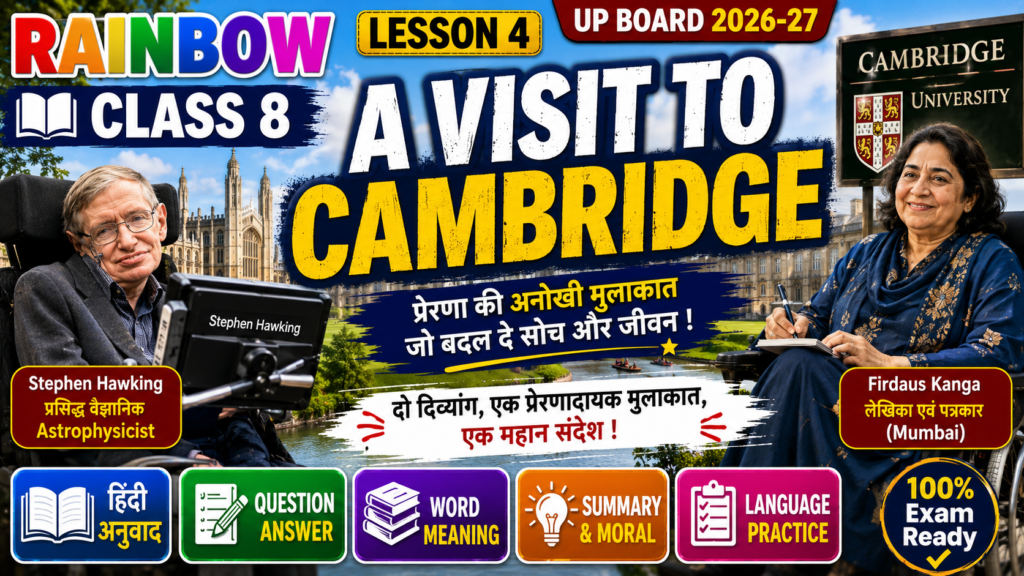
Rainbow Class 8 Lesson 4 – A Visit to Cambridge is an inspiring lesson based on the real-life meeting between Stephen Hawking and Firdaus Kanga. In this chapter, students learn that physical disability can never stop a person from achieving great success. Here you will find the Hindi Translation in simple language so that every Class 8 student can understand the lesson easily.
A Visit to Cambridge Hindi Translation Video
🎥 Watch Complete Hindi Translation Here
A Visit to Cambridge (हिन्दी अनुवाद)
भाग–1
English: This is the story of a meeting between two extraordinary people… moves around in wheelchair.
हिंदी अनुवाद
यह दो असाधारण व्यक्तियों की मुलाकात की कहानी है, जो दोनों ही दिव्यांग (Differently Abled) थे। पहले थे स्टीफन हॉकिंग, जो एक प्रसिद्ध खगोल भौतिक विज्ञानी (Astrophysicist) थे। वे एक प्रकार के लकवे (Paralysis) से पीड़ित थे, जिसके कारण उन्हें जीवनभर व्हीलचेयर पर रहना पड़ा। वे सामान्य रूप से बोल भी नहीं सकते थे और कंप्यूटर के बटन दबाकर अपनी बात व्यक्त करते थे। दूसरे थे फ़िरदौस कंगा, जो मुंबई में रहने वाले एक प्रसिद्ध लेखक और पत्रकार थे। उनका जन्म भंगुर हड्डियों (Brittle Bones) की बीमारी के साथ हुआ था। वे भी स्टीफन हॉकिंग की तरह व्हीलचेयर का सहारा लेकर चलते-फिरते थे।
भाग–2
English: Cambridge was my metaphor for England… because I had met Stephen Hawking there.
हिंदी अनुवाद
लेखक के लिए कैम्ब्रिज पूरे इंग्लैंड का प्रतीक था। लेकिन जब वे वहाँ से वापस लौटे, तब कैम्ब्रिज उनके लिए केवल एक शहर नहीं रहा। उसका महत्व पूरी तरह बदल चुका था, क्योंकि वहीं उनकी मुलाकात विश्व-प्रसिद्ध वैज्ञानिक स्टीफन हॉकिंग से हुई थी। यह मुलाकात उनके जीवन का सबसे यादगार अनुभव बन गई।
भाग–3
English: It was on a walking tour through Cambridge… whose Chair he has at the university.
हिंदी अनुवाद
जब लेखक कैम्ब्रिज शहर की सैर कर रहे थे, तब उनके गाइड ने स्टीफन हॉकिंग का उल्लेख किया। गाइड ने बताया कि वे अब पूरी तरह दिव्यांग हो चुके हैं, लेकिन फिर भी वे इतने महान वैज्ञानिक हैं कि उन्हें महान वैज्ञानिक आइज़ैक न्यूटन का योग्य उत्तराधिकारी माना जाता है। विश्वविद्यालय में वही प्रतिष्ठित पद (Chair) स्टीफन हॉकिंग के पास था, जिस पर कभी आइज़ैक न्यूटन कार्य कर चुके थे।
भाग–4
English: And I started… lived here.
हिंदी अनुवाद
यह सुनकर लेखक आश्चर्यचकित रह गए। वे कुछ समय के लिए यह भूल ही गए थे कि विश्व के सबसे प्रतिभाशाली और लगभग पूरी तरह लकवाग्रस्त खगोल भौतिक विज्ञानी, तथा विश्व-प्रसिद्ध पुस्तक A Brief History of Time के लेखक स्टीफन हॉकिंग इसी शहर में रहते हैं। उनकी पुस्तक दुनिया की सबसे अधिक बिकने वाली पुस्तकों में से एक थी।
भाग–5
English: When the walking tour was done… “Half an hour,” he said. “From three-thirty to four.”
हिंदी अनुवाद
जैसे ही शहर की सैर समाप्त हुई, लेखक तुरंत एक टेलीफोन बूथ पर पहुँचे। उन्होंने बड़ी कठिनाई से टेलीफोन का तार बाहर तक खींचा ताकि वे अपनी व्हीलचेयर से ही फोन कर सकें। उन्होंने स्टीफन हॉकिंग के घर फोन किया। दूसरी ओर उनके सहायक ने फोन उठाया। लेखक ने बताया कि वे भारत से व्हीलचेयर पर इंग्लैंड की यात्रा करने आए हैं और अपनी यात्रा के अनुभवों पर लेख लिख रहे हैं। उन्होंने कहा कि वे प्रोफेसर स्टीफन हॉकिंग से अवश्य मिलना चाहते हैं। उन्होंने विनम्रता से अनुरोध किया कि यदि केवल दस मिनट का समय भी मिल जाए तो उनके लिए बहुत होगा। इस पर सहायक ने उत्तर दिया कि उन्हें आधा घंटा, अर्थात दोपहर साढ़े तीन बजे से चार बजे तक, मिलने का समय दिया जा सकता है।
भाग–6
English: And suddenly I felt weak all over… you reach out further than you ever thought you could.
हिंदी अनुवाद
यह सुनते ही लेखक बहुत भावुक और कमजोर महसूस करने लगे। उनका कहना है कि बचपन से दिव्यांग होने के कारण लोग हमेशा उनसे बहादुर बनने की उम्मीद करते थे, मानो उनके पास साहस का कोई अलग खाता हो, जिससे वे जब चाहें साहस निकाल लें। लेकिन वास्तव में किसी दिव्यांग व्यक्ति को सबसे अधिक शक्ति तब मिलती है, जब वह अपने जैसे किसी व्यक्ति को असाधारण सफलता प्राप्त करते हुए देखता है। तब उसे यह विश्वास हो जाता है कि जीवन में बहुत कुछ संभव है और वह पहले से कहीं बड़े सपने देखने और उन्हें पूरा करने का साहस जुटा लेता है।
भाग–7
English: “I haven’t been brave,” said his disembodied computer-voice… “I’ve had no choice.”
हिंदी अनुवाद
अगले दिन मुलाकात के दौरान स्टीफन हॉकिंग ने अपने कंप्यूटर की कृत्रिम आवाज़ में कहा, “मैं बहादुर नहीं रहा हूँ। मेरे पास इसके अलावा कोई दूसरा विकल्प ही नहीं था।” उनके इन शब्दों से लेखक बहुत प्रभावित हुए। उन्हें महसूस हुआ कि कठिन परिस्थितियों में भी जीवन को स्वीकार करके आगे बढ़ना ही वास्तविक साहस है।
भाग–8
English: Surely, I wanted to say… sentences stiff as corpses.
हिंदी अनुवाद
लेखक के मन में यह बात आई कि इतनी गंभीर शारीरिक स्थिति में भी अपने जीवन को रचनात्मक ढंग से जीना निश्चित रूप से उनका अपना निर्णय था। लेकिन उन्होंने यह बात नहीं कही, क्योंकि उन्हें ऐसा लगता था कि जब भी वे स्टीफन हॉकिंग से कोई प्रश्न पूछते हैं, तो उन्हें उत्तर देने में बहुत अधिक कठिनाई होती है। वे अपने हाथ की उँगलियों की हल्की-सी हरकत से कंप्यूटर पर शब्द चुनते थे। उनके शरीर का केवल यही छोटा-सा हिस्सा काम करता था। कई बार उत्तर देते-देते उनकी आँखें थकावट और निराशा से बंद हो जाती थीं। लेखक उनके सामने बैठे हुए उनकी पीड़ा को महसूस कर रहे थे। उनके मन में अनेक विचार उमड़ते थे, लेकिन वे बड़ी कठिनाई से छोटे-छोटे वाक्यों के रूप में बाहर आ पाते थे।
भाग–9
English: “A lot of people seem to think… “I find it amusing when people patronise me.”
हिंदी अनुवाद
लेखक ने उनसे पूछा कि बहुत से लोग यह मानते हैं कि दिव्यांग व्यक्ति हमेशा दुखी रहते हैं, जबकि उन्हें स्वयं ऐसा नहीं लगता। उन्होंने पूछा कि क्या वे मन ही मन अक्सर हँसते रहते हैं। लगभग तीन मिनट बाद स्टीफन हॉकिंग ने उत्तर दिया, “जब लोग मुझ पर दया दिखाने या मुझे कमजोर समझकर व्यवहार करते हैं, तो मुझे वह बात मज़ेदार लगती है।”
भाग–10
English: “And do you find it annoying… I was looking at one of the most beautiful men in the world.”
हिंदी अनुवाद
लेखक ने मुस्कुराते हुए अगला प्रश्न किया कि क्या उन्हें बुरा लगता है जब उनके जैसे लोग उनके काम में बाधा डालने आ जाते हैं। स्टीफन हॉकिंग ने तुरंत उत्तर दिया, “हाँ।” इसके बाद उन्होंने अपनी हल्की-सी मुस्कान बिखेरी। उस मुस्कान को देखकर लेखक के मन में गहरा सम्मान उत्पन्न हुआ। उन्हें बिना किसी भावुकता के यह महसूस हुआ कि वे संसार के सबसे सुंदर व्यक्तियों में से एक के सामने बैठे हैं। यहाँ सुंदरता का अर्थ उनके चेहरे से नहीं, बल्कि उनके अद्भुत व्यक्तित्व और महान विचारों से था।
भाग–11
English: A first glimpse of him is shocking… you never thought could be seen.
हिंदी अनुवाद
पहली बार स्टीफन हॉकिंग को देखकर लेखक बहुत आश्चर्यचकित हो गए। वे बिल्कुल किसी स्थिर तस्वीर की तरह दिखाई दे रहे थे, मानो अखबारों और पत्रिकाओं में छपी उनकी तस्वीरें अचानक जीवित हो गई हों। उनका सिर एक ओर झुका हुआ था, शरीर बहुत दुबला हो चुका था और उनकी टाँगें बिल्कुल कमजोर दिखाई देती थीं। लेकिन उनकी आँखें अब भी बहुत कुछ कह रही थीं। उनमें जीवन जीने की अद्भुत इच्छा, गहरी बुद्धिमत्ता और कुछ महत्वपूर्ण कहने की बेचैनी साफ दिखाई देती थी। यह दृश्य लेखक के मन को गहराई तक झकझोर गया।
भाग–12
English: “What do you think is the best thing… how enthusiastically he agreed with me.
हिंदी अनुवाद
लेखक ने उनसे पूछा कि दिव्यांग होने का सबसे अच्छा पक्ष क्या है। स्टीफन हॉकिंग ने स्पष्ट शब्दों में उत्तर दिया कि उन्हें नहीं लगता कि दिव्यांग होने में कोई अच्छी बात होती है। तब लेखक ने कहा कि शायद इससे दुनिया में लोगों की दयालुता और सहानुभूति को समझने का अवसर मिलता है। इस पर हॉकिंग ने केवल “हाँ” कहा। लेकिन उनके कंप्यूटर की कृत्रिम आवाज़ में किसी प्रकार का भाव नहीं था, इसलिए लेखक यह समझ नहीं सके कि वे उनकी बात से कितनी सहमति रखते थे।
भाग–13
English: Every time I shifted in my chair… or even stand.
हिंदी अनुवाद
बातचीत के दौरान जब भी लेखक अपनी व्हीलचेयर पर थोड़ा-सा हिलते या समय देखने के लिए अपना हाथ उठाते, तो उन्हें अपने शरीर की क्षमताओं का गहरा एहसास होता था। वे चाहते थे कि मुलाकात का प्रत्येक क्षण उपयोगी बने। उस समय उन्हें यह सोचकर बहुत राहत और खुशी महसूस हुई कि वे भले ही कभी चल नहीं सकते थे, लेकिन उनके शरीर का अधिकांश भाग अभी भी उनका साथ दे रहा था। उन्हें लगा कि उनकी स्थिति स्टीफन हॉकिंग की तुलना में कहीं बेहतर है।
भाग–14
English: I told him how he had been an inspiration… there are people outside smiling with admiration to see you breathing still.
हिंदी अनुवाद
लेखक ने स्टीफन हॉकिंग से कहा कि वे केवल उनके लिए ही नहीं, बल्कि पूरी दुनिया के लाखों लोगों के लिए प्रेरणा हैं। उन्होंने पूछा कि क्या यह बात उन्हें खुशी देती है। स्टीफन हॉकिंग ने केवल “नहीं” कहा। तब लेखक को अपनी बात पर थोड़ा पछतावा हुआ। उन्होंने महसूस किया कि जब किसी व्यक्ति का शरीर धीरे-धीरे उसका साथ छोड़ रहा हो और वह स्वयं को एक छोटे से कमरे में कैद महसूस करता हो, तब बाहर के लोगों की प्रशंसा या सम्मान से उसकी वास्तविक कठिनाइयाँ कम नहीं हो जातीं।
भाग–15
English: “Is there any advice… “They should concentrate on what they are good at.”
हिंदी अनुवाद
लेखक ने अंत में उनसे पूछा कि क्या वे दिव्यांग लोगों को कोई ऐसी सलाह देना चाहेंगे जिससे उनका जीवन बेहतर बन सके। स्टीफन हॉकिंग ने बहुत संक्षिप्त लेकिन प्रेरणादायक उत्तर दिया, “उन्हें उसी कार्य पर ध्यान देना चाहिए जिसमें वे सबसे अधिक अच्छे हैं।” उनका यह संदेश बताता है कि व्यक्ति को अपनी कमजोरियों पर नहीं, बल्कि अपनी योग्यताओं और प्रतिभा पर ध्यान देना चाहिए।
भाग–16
English: The half hour was up… I touched his shoulder and wheeled out into the summer evening.
हिंदी अनुवाद
धीरे-धीरे आधा घंटा पूरा हो गया। लेखक मुस्कुराते हुए बोले, “मुझे लगता है कि मैंने आपको काफी परेशान कर दिया। आपका बहुत-बहुत धन्यवाद।” इसके बाद उन्होंने स्नेहपूर्वक स्टीफन हॉकिंग के कंधे को छुआ और अपनी व्हीलचेयर घुमाते हुए उस यादगार मुलाकात की अमूल्य स्मृतियों के साथ गर्मियों की शांत शाम में बाहर निकल आए।
Rainbow Class 8 Lesson 4 A Visit to Cambridge Question Answer
| English Word | Hindi Meaning |
|---|---|
| Extraordinary | असाधारण |
| Differently abled | दिव्यांग |
| Astrophysicist | खगोल भौतिक विज्ञानी |
| Paralysis | लकवा |
| Wheelchair | व्हीलचेयर |
| Metaphor | प्रतीक |
| Successor | उत्तराधिकारी |
| Brilliant | प्रतिभाशाली |
| Assistant | सहायक |
| Courage | साहस |
| Achieve | प्राप्त करना |
| Guilty | अपराधबोध होना |
| Exhaustion | थकान |
| Anguish | पीड़ा |
| Patronise | दया दिखाना / संरक्षण देना |
| Inspiration | प्रेरणा |
| Admiration | प्रशंसा |
| Concentrate | ध्यान केंद्रित करना |
A Visit to Cambridge Exercise Solution Video
🎥 Watch Complete Exercise Solution Here
Comprehension Questions
1. Answer the following questions.
(a) Name the book written by Stephen Hawking.
Answer:
The book written by Stephen Hawking is A Brief History of Time.
हिंदी उत्तर:
स्टीफन हॉकिंग द्वारा लिखी गई प्रसिद्ध पुस्तक का नाम A Brief History of Time है।
(b) What makes the “differently abled” people stronger, according to the author?
Answer:
According to the author, differently abled people become stronger when they see someone like themselves achieving great success.
हिंदी उत्तर:
लेखक के अनुसार, दिव्यांग लोग तब अधिक मजबूत बनते हैं जब वे अपने जैसे किसी व्यक्ति को बड़ी सफलता प्राप्त करते हुए देखते हैं।
(c) What is the scientist’s message for the disabled?
Answer:
Stephen Hawking’s message is that disabled people should concentrate on what they are good at.
हिंदी उत्तर:
स्टीफन हॉकिंग का संदेश है कि दिव्यांग लोगों को अपनी कमजोरियों पर नहीं, बल्कि अपनी प्रतिभा और जिस कार्य में वे अच्छे हैं, उसी पर ध्यान देना चाहिए।
(d) The writer expresses his great gratitude to Stephen Hawking. What is the gratitude for?
Answer:
The writer was grateful because Stephen Hawking inspired him to live positively and achieve success despite physical disability.
हिंदी उत्तर:
लेखक स्टीफन हॉकिंग के प्रति इसलिए आभारी था क्योंकि उन्होंने अपनी कठिन शारीरिक परिस्थितियों के बावजूद महान सफलता प्राप्त करके उसे और लाखों लोगों को प्रेरित किया।
Word Power
1. Choose the correct word from the box.
| Sentence | Answer |
|---|---|
| One who cannot see | Blind |
| One who cannot hear | Deaf |
| One who cannot speak | Dumb |
| One who cannot walk | Lame |
| One who cannot read or write | Illiterate |
2. Make meaningful phrases.
Example
Walk + Stick = A Walking Stick
अब नीचे दिए गए शब्दों से नए वाक्यांश (Phrases) बनाइए।
| Words | Phrase |
|---|---|
| read + session | A Reading Session |
| smile + face | A Smiling Face |
| revolve + chair | A Revolving Chair |
| walk + tour | A Walking Tour |
| dance + doll | A Dancing Doll |
| win + chance | A Winning Chance |
Language Practice
1. Use Neither…Nor
(a) I don’t like John. I don’t like Peter.
Answer:
I like neither John nor Peter.
(b) He did not come. He did not call.
Answer:
He neither came nor called.
(c) He does not drink. He does not smoke.
Answer:
He neither drinks nor smokes.
(d) She did not like Rome. She did not like Paris.
Answer:
She liked neither Rome nor Paris.
2. Use All or Both
(a)
He has two brothers.
Both are lawyers.
(b)
More than ten persons called.
All of them wanted to see you.
(c)
They all cheered the team.
(d)
Both her parents are teachers.
(e)
How much have you got?
Give me all of it.
3. Use Lets or Let's
(a)
His mother lets him watch T.V. till midnight.
(b)
Let’s hope for the best.
(c)
Let’s see what is on the menu.
(d)
The teacher lets the children play.
(e)
He lets his dog go out.
(f)
Let’s go fishing.
Summary
A Visit to Cambridge is an inspiring lesson written by Firdaus Kanga. It describes his memorable meeting with the famous scientist Stephen Hawking. Both of them were physically disabled, but they never allowed their disabilities to stop them from achieving success. During their conversation, Stephen Hawking advised disabled people to focus on their strengths instead of their weaknesses. The lesson teaches us that determination, confidence, and hard work are more powerful than physical limitations.
Moral of the Lesson
- Never lose hope because of physical disability.
- Believe in your abilities instead of your weaknesses.
- Hard work and determination lead to success.
- Every person deserves equal respect and opportunity.
Frequently Asked Questions (FAQs)
Q1. Who wrote A Visit to Cambridge?
Answer: The lesson was written by Firdaus Kanga.
Q2. Who was Stephen Hawking?
Answer: Stephen Hawking was a famous British astrophysicist.
Q3. Which disease did Stephen Hawking suffer from?
Answer: He suffered from a form of paralysis that confined him to a wheelchair.
Q4. What advice did Stephen Hawking give to disabled people?
Answer: He advised them to concentrate on what they are good at.
Q5. What is the main message of the lesson?
Answer: The lesson teaches us that physical disability cannot stop a determined person from achieving success.
Pingback: Rainbow Class 8th – Hamaraschool.com